
Business Loss or a Hobby Loss for Taxes


NYC and Albany NY IRS Tax Attorney
As Tax Attorney's located in New York, we often receive inquiries from clients who have a number of unfiled tax returns on whether a loss is a business loss or a Hobby loss when they contact us needing a IRS Attorney. If the loss is a Hobby loss, in general it can not be used to offset other forms of taxable income. In many cases, it is not a clear issue. The issue has also been a difficult one for the IRS to resolve, and they have started to more closely scrutinize tax returns with multi-year losses. When we prepare the tax returns and see these mutli-year losses on unfiled tax returns, that is when the issue arises from our perspective since we are trying to prepare a return that will be accepted without audit adjustment by the IRS.
In 2007, the inspector general found that when high income, self employed taxpayers (defined as more than $100,000) of income, and also filed a Schedule C with a loss, that in many cases the Schedule C loss was not a business, but rather a hobby. Of interest, of those returns 73 percent were prepared by tax professionals, who must have been satisfied that the loss was a business loss to sign the tax returns. Since there are no bright lines, one can imagine the uncertainty with this issue and the need for an IRS attorney.
The IRS and the Tax Courts look at a number of factors in trying to determine if a loss is deductible. 1) The manner in which the business is carried out, 2) The expertise of the taxpayer, 3) The time and effort expended by the taxpayer, 4) The history of income or losses related to the activity, 5) Are their elements of personal pleasure in the activity. One has to examine all these factors to determine if a loss is deductible computed by IRS Attorney.
Get relief now
Your tax problem has a solution. Contact Tim Hart today for immediate guidance.
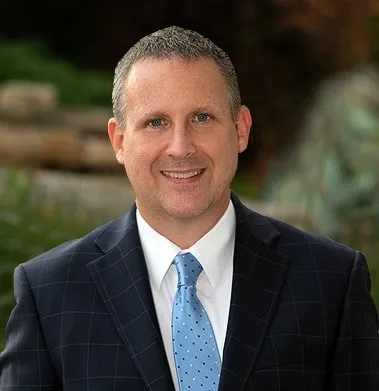
Attorney Timothy Hart
Timothy S Hart, the founding partner of the tax law firm of Timothy S. Hart Law Group, P.C. is both a New York Tax Lawyer & Certified Public Accountant. His area of expertise includes innovative solutions to solve your Internal Revenue Service and New York State tax problems, including tax settlements through the Federal and New York State offer in compromise programs, filing unfiled tax returns, voluntary disclosures, tax audits, and criminal investigations.